
Tag: health

  • Mindful Breathing Exercises for Anxiety and Relaxation

    Anxiety often begins quietly—in a restless mind, a tightening chest, or a breath that becomes shallow without us noticing. Before thoughts fully take over, the body is already responding.

    The breath sits at the meeting point between body and mind. By bringing gentle awareness to it, we can begin to soften anxiety, calm the nervous system, and return to a more grounded state.

    Mindful breathing is not about forcing change, but about allowing the body to remember its natural rhythm.


    Why the Breath Matters

    When we feel anxious, the breath becomes quick and shallow, signalling the body to remain in a state of alert. By slowing and deepening the breath—without strain—we send a different message: that it is safe to relax.

    Over time, this simple awareness can shift how we respond to stress and emotional tension.


    1. Natural Breath Awareness

    Begin by sitting or lying comfortably.

    Bring your attention to the breath as it is, without trying to change it. Notice the air moving in and out, the rise and fall of the chest or abdomen.

    If the mind wanders, gently return to the breath.

    This simple practice builds the foundation for all mindful breathing.


    2. Extended Exhale Breathing

    Inhale gently through the nose, then allow the exhale to be slightly longer than the inhale.

    For example:

    • Inhale for a count of 4
    • Exhale for a count of 6

    A longer exhale helps activate the body’s relaxation response, easing tension and calming the mind.


    3. Abdominal (Diaphragmatic) Breathing

    Place one hand on the chest and one on the abdomen.

    Allow the breath to move more deeply into the belly, so the lower hand rises while the upper hand remains relatively still.

    This encourages a slower, more grounded breath, helping to reduce anxiety.


    4. Pausing Between Breaths

    After each inhale or exhale, allow a brief, natural pause.

    Do not hold the breath forcefully—simply notice the stillness between breaths.

    These small moments of silence can create a sense of space within the mind.


    5. Breath with Gentle Awareness of the Body

    As you breathe, bring attention to areas of tension—such as the shoulders, jaw, or chest.

    With each exhale, imagine softening these areas, allowing the body to release what it has been holding.


    6. Rhythmic Breathing

    Establish a steady rhythm:

    • Inhale for 4
    • Exhale for 4

    Let the breath flow smoothly, without effort.

    This rhythm can help stabilise the mind when thoughts feel scattered or overwhelming.


    7. Breathing with Compassion

    If anxiety is strong, bring a sense of kindness into the practice.

    As you breathe, silently acknowledge:

    • “It’s okay to feel this way.”
    • “I can be with this moment.”

    This gentle approach reduces inner resistance and supports emotional balance.


    The Role of Stillness

    As breathing becomes slower and more natural, the mind begins to quiet. In this quietness, we may experience moments of stillness—free from constant thought and tension.

    These moments, however brief, are deeply restorative. They allow us to step out of the cycle of anxiety and reconnect with a calmer, more centred state of being.


    A Supportive Environment for Practice

    For many people, developing a consistent breathing practice can be challenging alone. A calm, guided environment can help deepen the experience.

    For those in North London, practices such as private yoga, meditation, or Reiki can gently support this process—offering space to slow down, breathe more fully, and reconnect with the body and mind.


    A Gentle Practice

    Mindful breathing does not require perfection or effort. It is a quiet returning—to something that has always been with us.

    Even a few minutes each day can begin to shift how we experience anxiety, creating space for calm, clarity, and balance.

    Enter the Absolute.

  • Spiritual Growth

    Getting Started with Private Yoga, Meditation & Reiki in North London

    Spiritual growth is a deeply personal journey, a process of coming to know ourselves more fully, expanding love and understanding, and discovering a sense of meaning, purpose, and connection to the Infinite Spirit. For those living in North London, practices like private yoga, meditation, and Reiki provide a supportive path to explore this inner journey.


    Yoga: Slowing Down and Calming the Mind

    Yoga is often the first step in cultivating spiritual growth. By guiding the body through gentle postures, mindful breathing, and awareness of movement, yoga teaches us to slow down, release tension, and bring attention to the present moment. This physical and mental calm creates the foundation for meditation: a mind that is rested, focused, and receptive.

    In private sessions, the personalised guidance allows you to move at your own pace, safely exploring postures and breathing techniques that resonate with your body and energy. This private environment fosters deeper relaxation, greater focus, and a stronger connection to your inner self, speeding up the journey toward spiritual insight.


    Meditation: Attaining Stillness and Self-Knowledge

    Once the mind is calmed through yoga, meditation allows us to go deeper into stillness and self-awareness. By sitting in silence, observing thoughts without judgement, and focusing inward, we begin to understand the nature of our mind, emotions, and habitual patterns.

    It is in this stillness that the union with the Infinite Spirit—the essence of yoga—is experienced. Meditation provides a mirror to the soul, helping us realise our full potential and expand qualities such as love, compassion, understanding, and happiness.


    The Role of Silence, Compassion, and Non-Judgement

    Spiritual growth flourishes when we cultivate:

    • Silence – creating space to hear our inner voice
    • Compassion – fostering kindness towards ourselves and others
    • Non-judgement – accepting ourselves and our experiences without criticism

    These qualities are strengthened through private yoga and meditation, where guidance is tailored to your unique needs, and distractions are minimised. The privacy and calm of a personal session accelerate progress, allowing for a more profound connection to your inner self.


    Reiki: Supporting Emotional and Spiritual Balance

    Reiki complements yoga and meditation by clearing energetic blockages, restoring harmony, and supporting emotional healing. This energy-based practice deepens your sense of balance and encourages a greater openness to self-reflection, helping spiritual growth unfold naturally.


    The Benefits of Focusing Within

    Practising yoga, meditation, and Reiki privately in a supportive environment can lead to:

    • Enhanced self-awareness and inner peace
    • Expanded compassion and empathy for others
    • Personal transformation, releasing limiting beliefs and past traumas
    • Clarity of purpose, aligning daily life with higher values
    • Experiencing unity and transcendence, moving beyond ego to feel connection with all life

    Through this inner focus, we cultivate the qualities necessary for spiritual growth, creating a life guided by mindfulness, love, and understanding.


    Getting Started

    Spiritual growth does not require prior experience or extraordinary discipline. It begins with small, intentional steps: a few minutes of mindful movement, quiet meditation, or energy work in a calm, private space.

    If you are in North London and wish to explore private yoga, meditation, or Reiki as a path to spiritual growth, I offer personalised sessions designed to support your journey inward, helping you slow down, reconnect, and nurture your highest potential.


    Enter the Absolute.

  • Adaptogenic Herbs

    Best Adaptogenic Herbs to Support Stress Relief and Calm

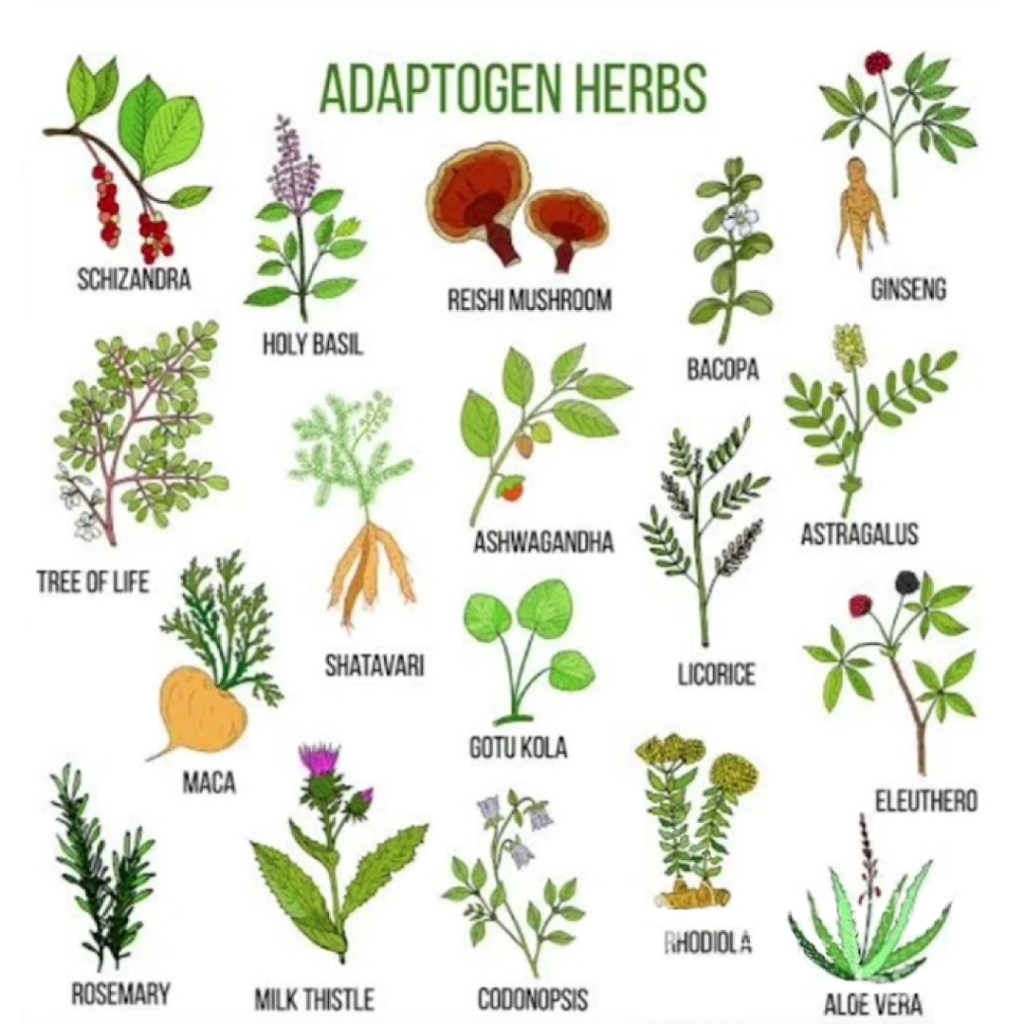
    Adaptogenic herbs are a unique category of plants and fungi that help the body adapt to stress, balance physiological functions, and promote overall well-being. They have been used for centuries in traditional medicine systems, including Traditional Chinese Medicine (TCM) and Ayurveda, and are now gaining popularity globally for their ability to support physical, mental, and emotional health. Here’s a detailed explanation of adaptogenic herbs, their benefits, and examples:


    What Are Adaptogens?

    • Definition: Adaptogens are natural substances (usually herbs or mushrooms) that help the body resist physical, chemical, and biological stressors.
    • Function: They work by regulating the hypothalamic-pituitary-adrenal (HPA) axis, which controls the body’s stress response.
    • Key Characteristics:
      1. Non-Specific: They help the body adapt to a wide range of stressors.
      2. Normalizing: They restore balance (homeostasis) regardless of whether the body is over- or under-functioning.
      3. Safe and Non-Toxic: They have minimal side effects when used appropriately.

    Benefits of Adaptogenic Herbs

    1. Reduce Stress and Anxiety:
      • Help lower cortisol levels (the stress hormone) and promote relaxation.
    2. Boost Energy and Combat Fatigue:
      • Improve physical and mental stamina without overstimulating the body.
    3. Enhance Mental Clarity and Focus:
      • Support cognitive function and reduce brain fog.
    4. Strengthen the Immune System:
      • Help the body resist infections and illnesses.
    5. Balance Hormones:
      • Regulate hormones related to stress, sleep, and metabolism.
    6. Improve Sleep Quality:
      • Promote restful sleep by calming the nervous system.
    7. Support Overall Well-Being:
      • Enhance resilience and vitality.

    Popular Adaptogenic Herbs

    1. Ashwagandha:
      • Origin: Ayurvedic medicine.
      • Benefits: Reduces stress, improves energy, and supports thyroid function.
      • Forms: Powder, capsules, or tinctures.
    2. Rhodiola Rosea:
      • Origin: Traditional medicine in Siberia and Scandinavia.
      • Benefits: Enhances mental performance, reduces fatigue, and improves mood.
      • Forms: Capsules, extracts, or teas.
    3. Holy Basil (Tulsi):
      • Origin: Ayurvedic medicine.
      • Benefits: Reduces stress, supports immune function, and promotes relaxation.
      • Forms: Tea, capsules, or tinctures.
    4. Ginseng:
      • Types: Asian ginseng (Panax ginseng) and American ginseng (Panax quinquefolius).
      • Benefits: Boosts energy, improves cognitive function, and supports the immune system.
      • Forms: Tea, capsules, or extracts.
    5. Reishi Mushroom:
      • Origin: Traditional Chinese Medicine.
      • Benefits: Supports immune health, reduces stress, and promotes relaxation.
      • Forms: Powder, capsules, or teas.
    6. Astragalus:
      • Origin: Traditional Chinese Medicine.
      • Benefits: Boosts immunity, reduces inflammation, and supports heart health.
      • Forms: Capsules, teas, or tinctures.
    7. Schisandra Berry:
      • Origin: Traditional Chinese Medicine.
      • Benefits: Enhances mental clarity, reduces stress, and supports liver health.
      • Forms: Powder, capsules, or teas.
    8. Maca Root:
      • Origin: Traditional medicine in the Andes.
      • Benefits: Boosts energy, balances hormones, and enhances libido.
      • Forms: Powder or capsules.

    How to Use Adaptogenic Herbs

    1. Teas and Infusions:
      • Brew dried herbs or mushrooms in hot water for a soothing drink.
    2. Powders:
      • Add to smoothies, coffee, or oatmeal.
    3. Capsules and Tablets:
      • Convenient for daily supplementation.
    4. Tinctures and Extracts:
      • Concentrated liquid forms that can be added to water or taken directly.
    5. Culinary Uses:
      • Incorporate adaptogens into recipes (e.g., reishi hot chocolate or maca energy balls).

    Safety and Considerations

    1. Consult a Healthcare Provider:
      • Especially if you are pregnant, breastfeeding, or taking medications.
    2. Start Slowly:
      • Begin with small doses to see how your body responds.
    3. Quality Matters:
      • Choose high-quality, organic products from reputable brands.
    4. Avoid Overuse:
      • Adaptogens are meant to support the body, not replace a healthy lifestyle.

    Why Are Adaptogens Trending?

    1. Rising Stress Levels:
      • Modern lifestyles have increased demand for natural stress-relief solutions.
    2. Holistic Health Movement:
      • Consumers are shifting toward natural and preventive health practices.
    3. Scientific Validation:
      • Growing research supports the benefits of adaptogens for stress, energy, and immunity.
    4. Celebrity Endorsements:
      • Many wellness influencers and celebrities promote adaptogens for their health benefits.

    Conclusion

    Adaptogenic herbs are powerful natural remedies that help the body adapt to stress, boost energy, and promote overall well-being. With their roots in traditional medicine and growing scientific validation, they are becoming a staple in modern wellness routines.